Fall Memories
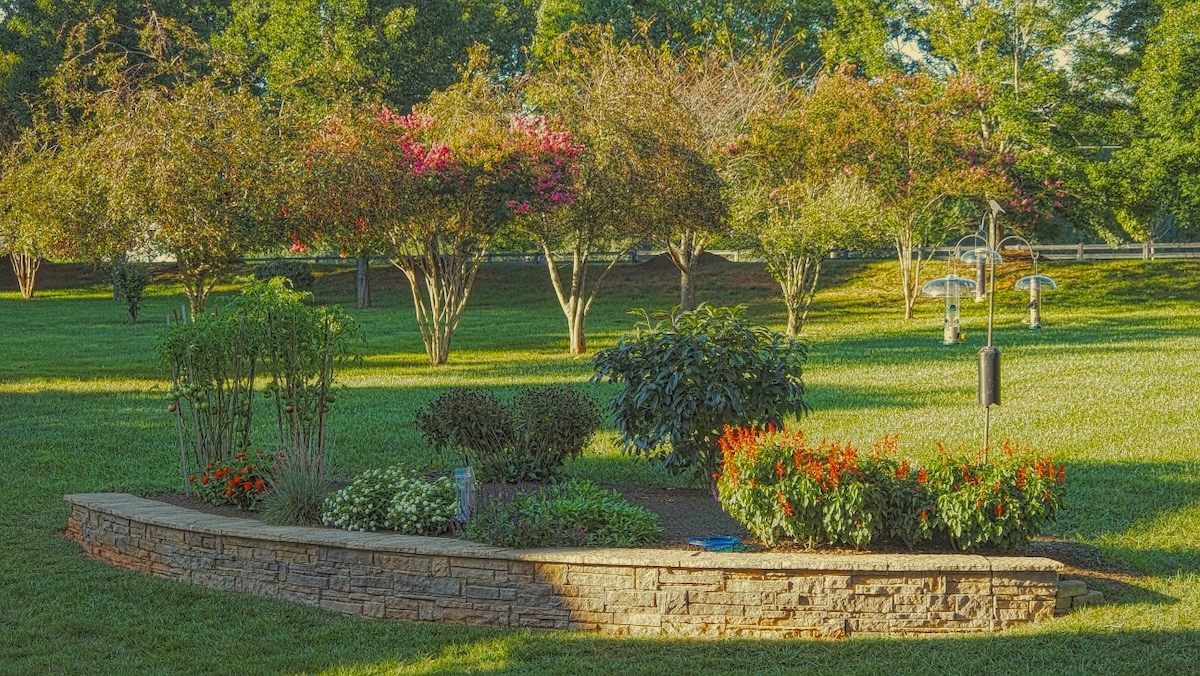
When the yards and gardens start looking like fall, memories come flooding back and they have nothing to do with pumpkin spice.
Just after Labor Day 1963, not long after our Boy Scout Troop 752 hiked the over twenty miles of the Wilderness Road through Kentucky, West Virginia, and Virginia. I went off to military school. The hike was the last thing that I did with the Scout troop that had dominated my life for over three years. I spent the next four years at the McCallie School in Chattanooga, Tennessee. I was desperately homesick the first couple of months. I got over it and by graduation felt like I came out a success. However, it was years before I could wear black socks and black shoes. Inexplicably, I still like to polish brass. I did carry with me the school motto of "Honor, Truth, Duty."
Four years later another memorable fall, the fall of 1967, I got in my car and drove myself over twelve hours to Cambridge, Massachusetts to begin my four years at Harvard. I was still a country boy, more used to woods than city streets but I was determined to make the best of my college experience which included the wild country to the north. That first fall we visited the original LL Bean store, a tiny place in Freeport, Maine that still had a wood stove in one room and was open twenty-four hours a day. It was the beginning of an infatuation with the cold country that eventually led me to Nova Scotia.
Then there was the fall after I graduated from college. Nova Scotia had captured my soul along with $6,000 that bought 140 acres on the Bay of Fundy with an old house and a barn. As fall deepened and strong winds continued to blow off the never very warm Bay of Fundy, it became clear that we needed more heat than the electric baseboard variety. I hired someone to build us a brick chimney with a stone fireplace. It was not exactly the best idea for heat, but the only wood stoves available in Nova Scotia those days were cook stoves. The fireplace added a lot of charm, and in a pinch, it could keep us warm if the power went out.
Eventually the electric stove, refrigerator, and freezer got installed. That first year we were focused on Thanksgiving as a time to have the place relatively livable. We had college friends making the trek to Nova Scotia to see what the crazy guys who had gone back to the land were doing.
Progress was made, but when the holiday rolled around, our kitchen cabinets were still wooden egg crates and we drank out of recycled mayonnaise jars.
We worried little about bedrooms since in those days all college kids needed was a spot on a floor. An air mattress or some padding was as good as being in the Ritz for college students in late sixties and early seventies.
Thanksgiving of 1971 became the first major holiday that many of us had spent outside of a home without parents as lifelines. We had to figure out how to cook a turkey. Deciding what ingredients went into the stuffing was a lesson in diplomacy. Yet we managed to do it, and it seemed like getting our Thanksgiving dinner to the table was as important as graduating from college. Negotiating the celery content of dressing should be a college course. Sally, Susan, Richard, Nancy, Gene, and David made the trip north.
Then after I got married, we moved onto our farm in late fall, November of 1974. The ground already had two feet of snow on it. We did not see the ground again until May of 1975. According to my rough calculations, we had around 23 feet of snow fall that year. Glenda, my wife, used to laugh when our North Carolina relatives asked it had snowed. She would say, “It snows almost every day. Unless it is a foot more, people just ignore it.” It was the perfect place to live for cross-country skiing. There was a new coat of snow every morning.
Tay Creek was unique because until the late fifties, they hadn’t bothered plowing the roads in the winter. People would just use their horse drawn sleighs. People were used to snow and in general ready for a storm at anytime. Our old farm house was one long structure with a wood shed, a carriage house, an old out house, and a chicken coop. The barn and the granary were close to the house. Our house had spring fed water. The owners had converted it to oil heat, but we built a chimney and added a very efficient wood stove. We would burn three or four cords of wood yearly and early in the morning before we got up, the oil furnance would come on, and then before I went to the barn to milk the cow, I would build a fire in the wood stove.
The first winter we learned the signs of really cold weather. Usually in January, the temperature would drop below zero and for a series of days, today’s low temperature would be tomorrow’s high temperature. Finally it would get down in the minus twenties and the low and high were the same. Cold weather was something you got used to because if you had cattle, you had to feed them.
There are other memorable falls, such as the fall of 1970 when we came back from our summer in Alaska, and the fall of 1989 when our whole family including Buffy the cat moved to an appartment in Roanoke, Virginia. We stayed there while our house on the mountain was being finished. Then there was the fall of 2004, the first fall in two decades when I wasn’t an Apple employee. Another was the fall of 2006, when we got our house on the coast and I started immersing myself in saltwater and the culture of the coast.
The fall of 2025 is another memorable one. It is the first since I had a heart valve replaced. I am still recovering and still hopeful that I haven’t made the last cast with my fly rod. I would like to make a few more memorable falls.